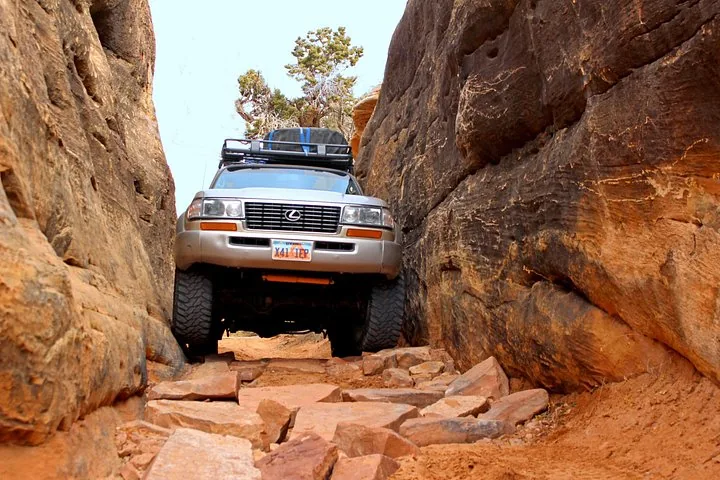
In short
- Bring at least 1 gallon of water per person per day.
- Pack a full-size spare tire and vehicle recovery gear.
- Layered clothing and sun protection are essential.
In this article
Whether you book a guided tour or drive your own high-clearance 4WD vehicle, packing correctly is critical for safety in Canyonlands National Park. Extreme temperature shifts and remote conditions mean you must be ready for anything.
How much water do I need for the White Rim Road?
You must bring at least 1 gallon (3.8 liters) of water per person per day.
There is absolutely no potable water along the White Rim Road. The desert environment dehydrates you quickly, even in cooler months. Bring extra water for emergencies and vehicle needs.
If you take a guided tour, operators usually provide ice water, but you should still bring a personal water bottle.
What vehicle gear is required for self-driving?
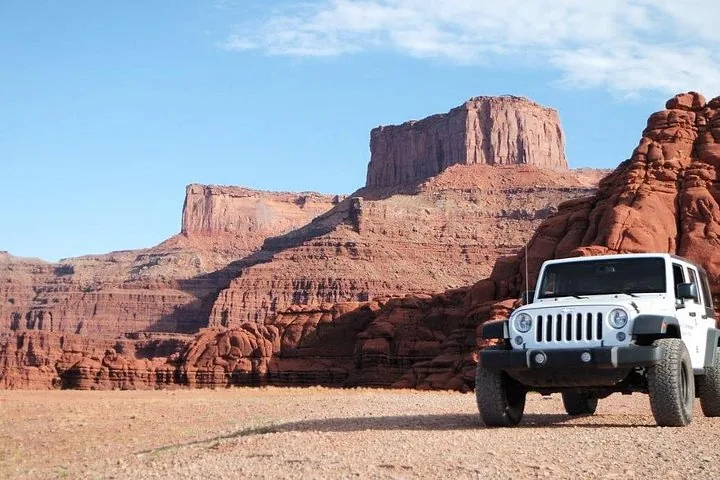
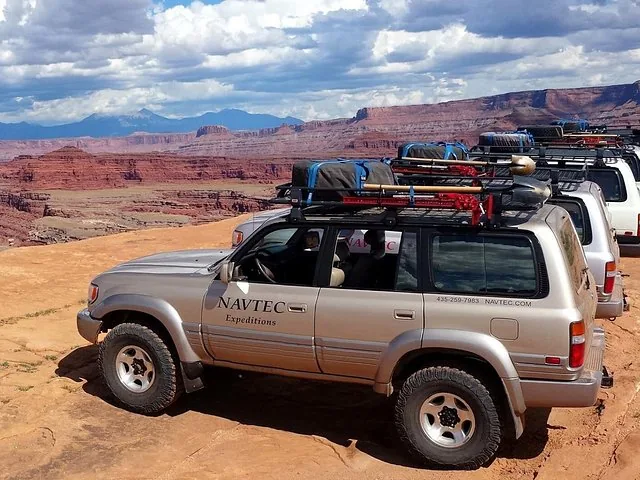
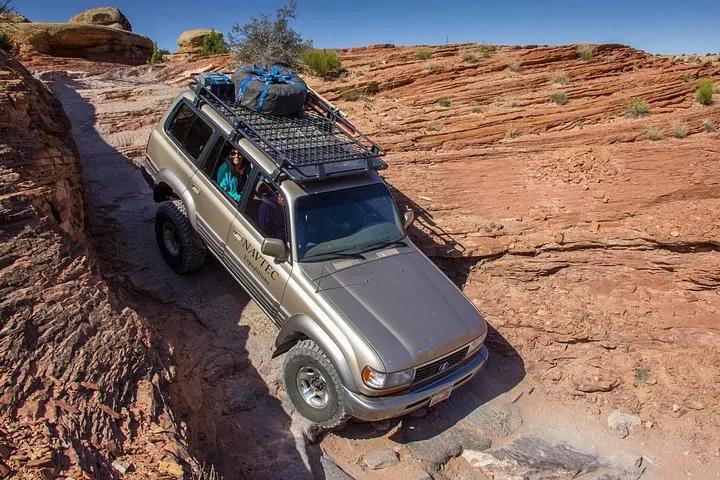
You need a high-clearance 4WD vehicle with a low range gear, plus recovery equipment.
- Full-size spare tire and a reliable jack
- Vehicle recovery gear: tow strap, shovel, and tire deflator
- Printed offline maps or downloaded GPS routes (there is zero cell service)
What clothing is best for Canyonlands backcountry?
Pack layers to adapt to extreme temperature shifts from day to night.
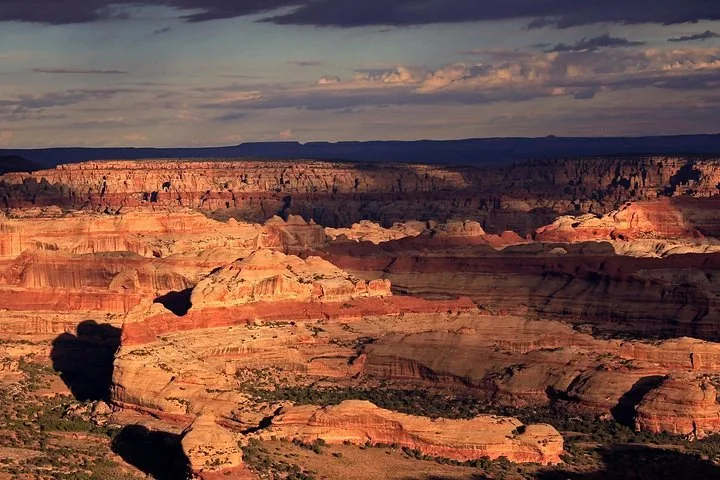
Mornings can be freezing, while afternoons often bake in the sun. Sturdy hiking boots or shoes are necessary for walking on rocky, uneven side trails like Musselman Arch or Lathrop Canyon.
What sun protection should I pack?
Bring a wide-brimmed hat, strong sunscreen, and UV-blocking sunglasses.
The Island in the Sky mesa and the White Rim terrace offer very little shade. Sun exposure is constant, especially if you spend time outside the vehicle exploring viewpoints or taking short hikes.
Are there toilets, or do I need to pack waste supplies?
You must bring personal wag bags for human waste disposal if you are not near a vault toilet.
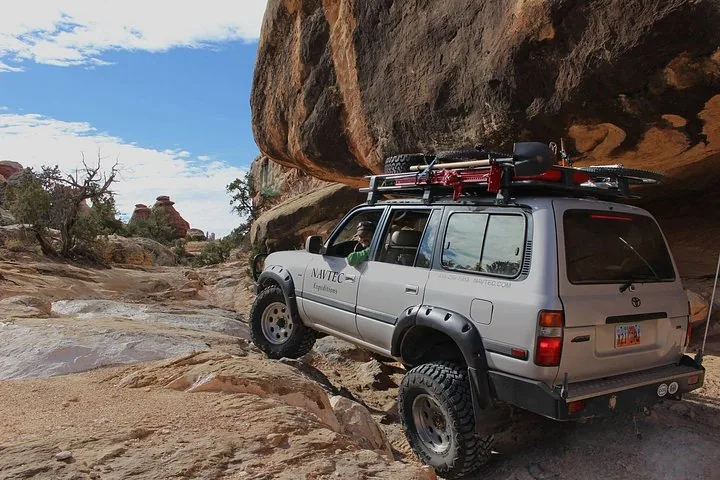
Overnight camping is allowed only in 20 designated backcountry campsites. Some have vault toilets, but on long stretches of the 100-mile loop, you must pack out all solid human waste. Always carry toilet paper and hand sanitizer.
What other survival essentials are necessary?
A comprehensive first-aid kit and extra high-energy food are critical.
Breakdowns or flat tires can strand you for hours or overnight before help arrives. Pack plenty of extra snacks, meals, and emergency medical supplies just in case.
Questions travellers ask
Do I need a 4x4 for the White Rim Road or is AWD okay?
You must have a high-clearance four-wheel-drive vehicle with a low range gear. All-Wheel Drive (AWD) vehicles are strictly prohibited by the National Park Service.
Are ATVs or UTVs allowed on the White Rim Trail?
No. ATVs, UTVs, and OHVs are strictly banned everywhere inside Canyonlands National Park.
What happens if you get a flat tire or break down in Canyonlands?
Since there is no cell service, you must rely on your own skills, recovery gear, and spare parts, or wait for another permitted driver to pass by. This is why a full-size spare tire and extra food and water are essential.